
Wednesday 10:20 AM - 11:30 AM · Room 347-348, 3rd Floor
What's New in SQL Tools

Drew Skwiers-Koballa
Program Manager at Microsoft
Databases and technology are evolving quickly, and the tools you use every day are evolving with it. In this session, we’ll take a tour of what’s new and what’s next across Microsoft’s SQL tooling ecosystem, with plenty of demos from SQL Server Management Studio (SSMS) and Visual Studio Code. We’ll also explore how GitHub Copilot is being integrated to help you interact with SQL more efficiently directly in the tools you already use. Beyond the core editors, we’ll cover key advances in database CI/CD and client SDKs, showing how they fit together to support modern development practices. No matter your level of expertise, this session will help you understand how recent changes to the SQL tools can make them work better for you.
Wednesday 10:20 AM - 11:30 AM · Room 320-321, 3rd Floor
Lessons from the Field: Building AI-Ready Microsoft Data Estates
David Hay
Solution Architect

Steven Wise
Solution Partner, Datavail
Many organizations are already using Microsoft Fabric, Power BI, SQL Server, Azure data services, and cloud data platforms. The challenge now is not whether these tools can work. It is how to turn a fragmented, fast-changing data estate into a trusted foundation for analytics, automation, Copilot, and AI agents.
Across client engagements, we see organizations moving toward the same desired end state: governed data, reliable pipelines, trusted semantic models, clearer ownership, production-ready operations, and business teams that can act on the information in front of them.
The path there is rarely clean. It often involves legacy SQL Server environments, Power BI sprawl, inconsistent definitions, disconnected source systems, migration decisions, platform overlap, and governance models that have not caught up with AI.
In this session, we will share lessons from the field on what actually breaks, what teams should fix first, and how technical teams can move from platform adoption to durable business value.
You will learn:
• How organizations are rationalizing SQL Server, Fabric, Power BI, and cloud data platforms into a more coherent data estate • What separates initial Fabric adoption from a production-ready operating model • Why trusted semantic models, data quality, and ownership matter more as Copilot and AI agents enter the picture • Where modernization efforts commonly break down across migrations, integrations, governance, and operational support • How AI changes the stakes by exposing weak definitions, poor access controls, and fragile data foundations • Practical lessons for moving from fragmented reporting and platform pilots toward governed, AI-ready analytics
This session is designed for data architects, DBAs, Fabric and Power BI practitioners, analytics leaders, and technical decision makers responsible for modernizing Microsoft data environments while preparing for AI-driven work.
Wednesday 11:40 AM - 12:50 PM · Room 347-348, 3rd Floor
Database Backups 101

Jeff Taylor
Principal Data Consultant, Microsoft Data Platform MVP
In this session, we will be covering the basics of SQL Server backups. This includes an overview of the different types of backups, how they work, and their differences. We will also discuss backup strategies, performance optimization, and ways to improve backup processes. Additionally, we will delve into topics such as compression, TDE (Transparent Data Encryption), and setting up alerts. Furthermore, we will explore free and paid backup solutions that are available for ease of use.
Wednesday 11:40 AM - 12:50 PM · Room 335-336, 3rd Floor
AI Driven Data Engineering with Spec Driven Development
Arnav Loonker
AI Architect
Keshav Polepalle
MAQ Software - Director
Explore how Spec-Driven Development is transforming data engineering by making specifications the foundation of the Software Development Life Cycle (SDLC). This session demonstrates how business requirements, user stories, architecture decisions, and acceptance criteria can be captured as structured specifications that guide development from concept to production.
Through a customer case study and live demo, attendees will see how specifications drive solution design, AI-assisted code generation, testing, documentation, deployment, and governance. The session will also showcase how Harness enables orchestration of AI-powered development workflows and how QE/Eval frameworks establish automated testing, validation, and quality guardrails for AI-generated outputs.
Participants will gain practical insights into improving engineering productivity, accelerating delivery, reducing risk, and ensuring enterprise-grade quality through specification-first, AI-driven development practices.
Wednesday 3:50 PM - 5:00 PM · Room 337-339, 3rd Floor
Iceberg Everywhere: Federating Your Data Estate with OneLake and the Iceberg REST Catalog

Matthew Hicks
Principal Product Manager on Microsoft Fabric
Roy Hasson
Product leader, Microsoft Fabric and OneLake Workloads
Enterprise data is fragmented, and AI pays the price. See how Microsoft OneLake makes Apache Iceberg a first-class citizen, letting Fabric, Databricks, Snowflake, Clickhouse, Spark, and Trino read and write the same tables with no copies or ETL. We'll dive into catalog federation via the Iceberg REST spec, showing how to unify access across data platforms, and how an open, unified lakehouse becomes the foundation for higher-quality AI, agent grounding, and analytics copilots on fresh, governed data.
Wednesday 3:50 PM - 5:00 PM · Room 425, 4th Floor
Roundtable Discussion: Dataflows - The Good, The Bad and the Ugly
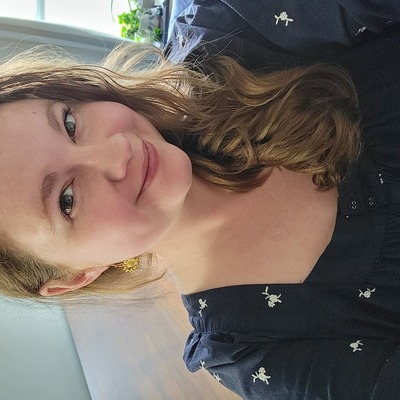
Kristyna Ferris
Solution Architect at P3 Adaptive
Join us for an engaging and informal gathering where participants delve into topics that matter to them. Roundtable Discussions are a space for sharing ideas, perspectives, and experiences with other attendees. Pull up a chair, and let’s exchange insights!
Thursday 8:30 AM - 9:40 AM · Ballroom 2, 5th Floor
Keynote: From Databases to Agents: Building the Data Foundation for the Agentic Enterprise

Shireesh Thota
Corporate Vice President, Azure Databases – Microsoft
AI is redefining enterprise applications, and the organizations that lead this shift will be built on the strongest data foundations. Agents require transactional data, real-time context, persistent memory, analytics, governance, and enterprise-grade security across a unified platform. In this keynote, Shireesh Thota, CVP of Azure Databases, will walk you through how Microsoft is building the data foundation for the agentic enterprise. Azure SQL and Cosmos DB power operational intelligence, Azure Managed Redis provides low-latency memory and context, and Horizon DB delivers a cloud native managed PostgreSQL platform for modern applications. Microsoft Fabric unifies the enterprise data estate through OneLake, bringing together data, analytics, real time, and business intelligence all through a unified security and governance model and Rayfin accelerates intelligent application development with backend-as-a-service capabilities for data access, orchestration, and integration. Join us to learn how leading top Fortune 100 companies are turning their data into intelligence and building autonomous systems that reason, act, and drive business outcomes at scale.
Thursday 9:50 AM - 10:10 AM · Solution Studio
Master Data Light with Clarity Databook

Ben Hansen
Truegility CEO
Launch Power BI transformations that work. We know BI reporting has two hard-to-crack dependencies: clean data on the back-end and governed customization on the front-end.
Clarity Databook takes the pain out of keeping your data consistent. Think of it as data management without the enterprise price tag or the six-month implementation. Clean up your data where it starts
- Give non-technical users a safe way to manage reference data with table creation, form input and access
- Data security at scale with control access at the row, object, or role level
- Custom hierarchies on the fly: shared across your organization instantly
Clarity Reportbook is a Power BI enhancement that simplifies building and distributing presentations by customizing and grouping the reports you already have. Your data can be fit for purpose
- One click away: enable fast customization to help owners, builders and users
- Filter once, explore everywhere with global filters across pages and workspaces
- Cross workspace app building: a single dashboard from multiple workspace domains without the complexity
- Snapshot reports for key moments to freeze and capture a point-in-time view and push it straight to PowerPoint
Thursday 10:20 AM - 11:30 AM · Room 343-344, 3rd Floor
Making AI Agents Smarter with Fabric IQ, Foundry IQ, and Work IQ
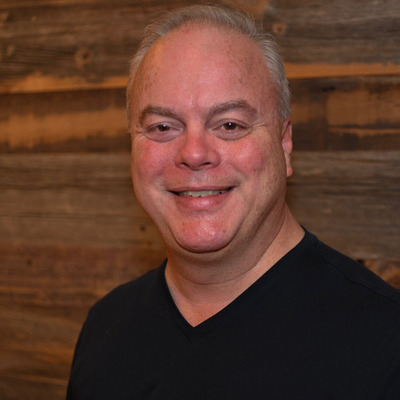
Treb Gatte
Microsoft MVP, MCP, MCTS, MBA, CEO, Marquee Insights
Connecting Copilots and Microsoft Foundry AI agents to company data across SharePoint, databases, and documents is complex. Foundry IQ + Fabric IQ + Work IQ provide secure, unified access through one API. Learn to connect agents to multiple sources, configure permissions, use Agent Factory for deployment, and ensure agents understand business context, not just raw data.
Thursday 2:00 PM - 3:10 PM · Room 335-336, 3rd Floor
Database Agents The Next Evolution of Managing SQL at Scale

Bob Ward
Principal Architect, Microsoft Azure Data
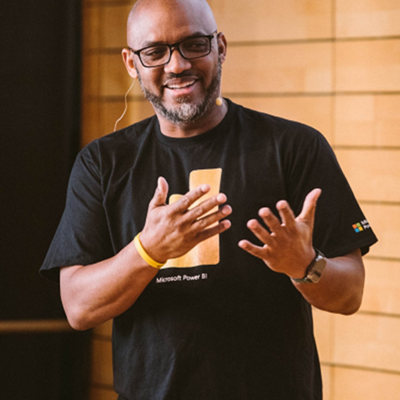
Patrick LeBlanc
Principal Program Manager, MIcrosoft
Managing databases has always required a balance between performance reliability and operational overhead. As environments expand across SQL Server PostgreSQL and cloud platforms that balance becomes increasingly difficult to maintain.
In this session we explore how database agents powered by modern AI are changing the way teams monitor optimize and operate their data platforms. Instead of relying on reactive scripts and manual intervention agents introduce a new model built on continuous context aware assistance that can surface issues recommend actions and even automate routine tasks.
We will walk through real world scenarios showing how agents can support performance tuning cost management and operational visibility across heterogeneous environments. Just as important we will discuss where agents provide meaningful value and where they do not.
You will leave with a practical understanding of how to think about agents in your architecture and how to adopt them responsibly without introducing unnecessary complexity or risk. introducing new complexity or risk.g work, and shift effort from grunt tasks to real design and logic, the MCP Server is the upgrade you’ve been waiting for.
Friday 9:00 AM - 10:10 AM · Room 347-348, 3rd Floor
Backups Lie: Learning SQL Server Recovery Before It’s Too Late

Daniel Taylor
Microsoft Sr Cloud Solution Architect | Global Data & AI

Josh Luedeman
Principal Solution Architect and Technology Strategist
Backups are only valuable if you know how to recover. This beginner‑friendly session focuses on the fundamentals of SQL Server recovery—what happens when things go wrong and how to get your data back with confidence. We’ll cover core backup types, what they actually enable during recovery, and the common gaps that leave teams unable to restore when it matters most. You’ll see how recovery differs across SQL Server running on‑premises, in virtual machines, and in Azure, including how IaaS approaches compare to Azure SQL Database and Managed Instance. Through simple demos and real‑world scenarios, you’ll learn how restores really work and how to choose the right recovery strategy before an outage forces the decision.
Friday 10:20 AM - 11:30 AM · Room 425, 4th Floor
Roundtable Discussion - Choose your Own Adventure

Jared Kuehn
Data Platform MVP by day, Storyteller by night
Liz Sundet
Join us for an engaging and informal gathering where participants delve into topics that matter to them. Roundtable Discussions are a space for sharing ideas, perspectives, and experiences with other attendees. Pull up a chair, and let’s exchange insights!
This session will be run like an Unconference so come with your own topics. We will spend a little time sorting the topics and then dive in on discussion. Facilitated by expert speakers and allow you to weigh in on the topics that matter most to you.
Friday 12:30 PM - 1:40 PM · Room 425, 4th Floor
Roundtable Discussion - Data Security and Security for AI
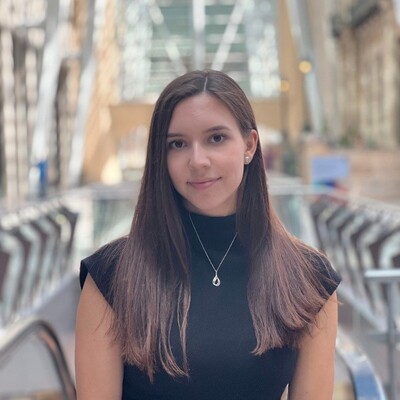
Anna Bordioug
Technology Consultant, Protiviti

David Drever
Microsoft 365 MVP - Compliance, Data Protection, and M365 Specialist
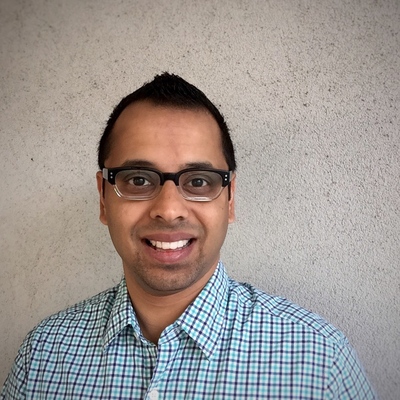
Deep Trivedi
Microsoft 365 Security & Compliance.
Join us for an engaging and informal gathering where participants delve into topics that matter to them. Roundtable Discussions are a space for sharing ideas, perspectives, and experiences with other attendees. Pull up a chair, and let’s exchange insights!
Friday 1:50 PM - 3:00 PM · Room 345-346, 3rd Floor
Securing Data in Fabric with OneLake
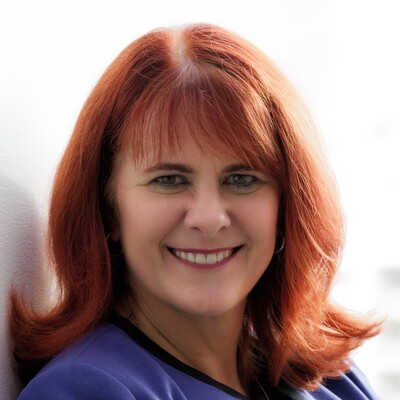
Ginger Grant
Principal and Founder of Desert Isle Group
Fabric provides multiple layers of security inside of OneLake. This session will explain how OneLake Security applies to data stored in different object types and at different access levels. Attendees will learn how permissions, shortcut behaviors, semantic model Row Level Security (RLS), Object Level Security work with OneLake Security to protect data.
Through live demos, you’ll see how to validate these security settings using a test user, giving you a real-world view of how the various layers interact within an actual architecture. You will also learn how to design secure, least privilege data access across your Fabric environment and, importantly, the steps needed to properly test and confirm that your security model works as intended.