Wednesday 10:20 AM - 11:30 AM · Room 320-321, 3rd Floor
Lessons from the Field: Building AI-Ready Microsoft Data Estates
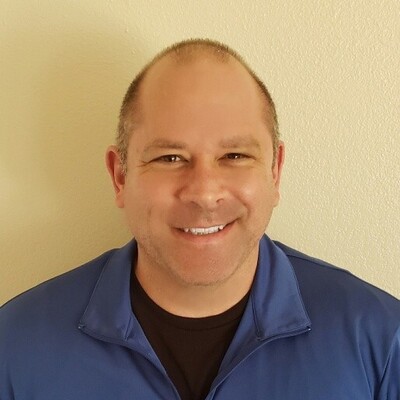
David Hay
Solution Architect

Steven Wise
Solution Partner, Datavail
Many organizations are already using Microsoft Fabric, Power BI, SQL Server, Azure data services, and cloud data platforms. The challenge now is not whether these tools can work. It is how to turn a fragmented, fast-changing data estate into a trusted foundation for analytics, automation, Copilot, and AI agents.
Across client engagements, we see organizations moving toward the same desired end state: governed data, reliable pipelines, trusted semantic models, clearer ownership, production-ready operations, and business teams that can act on the information in front of them.
The path there is rarely clean. It often involves legacy SQL Server environments, Power BI sprawl, inconsistent definitions, disconnected source systems, migration decisions, platform overlap, and governance models that have not caught up with AI.
In this session, we will share lessons from the field on what actually breaks, what teams should fix first, and how technical teams can move from platform adoption to durable business value.
You will learn:
• How organizations are rationalizing SQL Server, Fabric, Power BI, and cloud data platforms into a more coherent data estate • What separates initial Fabric adoption from a production-ready operating model • Why trusted semantic models, data quality, and ownership matter more as Copilot and AI agents enter the picture • Where modernization efforts commonly break down across migrations, integrations, governance, and operational support • How AI changes the stakes by exposing weak definitions, poor access controls, and fragile data foundations • Practical lessons for moving from fragmented reporting and platform pilots toward governed, AI-ready analytics
This session is designed for data architects, DBAs, Fabric and Power BI practitioners, analytics leaders, and technical decision makers responsible for modernizing Microsoft data environments while preparing for AI-driven work.
Wednesday 1:50 PM - 3:00 PM · Room 320-321, 3rd Floor
Microsoft Fabric, Power BI Writeback to SQL, & Sentiment Analysis with Microsoft Foundry

Bradley Ball
Microsoft - Sr. Technical Program Manager
Power BI writeback is technically called Translytical Task Flows. However, nobody knows what Translytical Task Flows are.... which is Power BI writeback. This functionality allows you to turn your Power BI reports into Apps.
How does this work? We use User Data Functions as the pass through mechanism to update data in a database and Direct Query or Direct Lake Semantic Models to update the reports.
In this session we will use a real-world scenario where we take customer reviews, score them for sentiment using a user data function, display them in a Power BI report and allow our Power BI users who own the products being reviewed to enter feedback for the leadership team of their company.
This will be an end-to-end demo so you can walk away with a full understanding of how to implement this for your business.
Wednesday 1:50 PM - 3:00 PM · Room 335-336, 3rd Floor
You Can't AI Your Way Out of Bad Data: A Practitioner's Blueprint for AI-Ready Data on Azure and SQL

Kevin Marshbank
Founder & Principal Consultant of The Data Vault Shop
Every organization wants to build AI-powered analytics. Most are discovering that AI doesn't fix bad data, it scales it. The real blocker isn't the model, the GPU, or the orchestration layer. It's the warehouse underneath.
In this session, Kevin Marshbank,Principal Consultant at The Data Vault Shop and a data warehouse architect with over 15 years building enterprise data environments, will walk through what it actually takes to structure a data environment that AI can work with. Drawing on hands-on implementations across Azure Synapse, Microsoft Fabric, and SQL Server, Kevin will break down the architectural decisions that determine whether your AI initiatives succeed or stall; regardless of the modeling methodology you've chosen.
This is not a session about picking the right data model. It's about the properties that any well-built warehouse must have to serve AI reliably: full historicity, traceable lineage, rich metadata, enforced governance, and semantic clarity. Kevin will show how these properties are achieved in practice, and why they're harder to retrofit than to build in from the start.
A central theme of the session is metadata, not as a documentation afterthought, but as the architectural connective tissue that makes AI workloads possible at scale. Kevin will cover how metadata-driven development approaches, which he applies in production using WhereScape's automation tooling on Azure, allow teams to generate pipelines, lineage, governance artifacts, and documentation from a single design layer, reducing manual coding by over 90% while producing the kind of governed, traceable data structures that AI systems actually need.
Attendees will walk away able to:
- Audit their own data architecture against concrete AI-readiness criteria
- Understand the metadata and governance gaps most likely to derail AI initiatives in production
- Evaluate automation approaches that reduce manual development burden while building AI-ready structure into the warehouse from the ground up
- Apply practical patterns Kevin has used across real Azure-based implementations to accelerate AI readiness without starting over
Wednesday 3:10 PM - 3:30 PM · Collab Studio
Start with the Data Estate, Finish with a Unified Platform

Mehul Joshi
Senior Director and Global Practice Leader - SQL Server, Datavail
Data challenges begin long before analytics or AI. A fragmented data estate spanning multiple databases, platforms, and technologies creates barriers to consistency, scalability, and trust. Learn how organizations address this challenge in two phases. First, by migrating and aligning their data estate to Azure, reducing fragmentation and improving manageability across SQL Server, Oracle, PostgreSQL, and other environments. Second, by modernizing their data platform using Microsoft Fabric to unify data, streamline analytics, and improve reporting. Through real-world examples, we’ll discuss: • How to assess and modernize a diverse data estate • What changes once data is better aligned to Azure • Lessons learned from enterprise data estate modernization
Wednesday 3:50 PM - 5:00 PM · Room 320-321, 3rd Floor
Building a Multi‑Agent Banking App with Microsoft Fabric

Mehrsa Golestaneh
Senior Program Manager at Microsoft

Pam Lahoud
Principal Program Manager, Microsoft Fabric Customer Advisory Team - Databases in Fabric
Agentic applications are rapidly moving from prototypes to real production workloads, but the real challenge begins after these solutions are deployed: Proactive and continuous optimization and linking AI usage to business value! In this session, we walk through a production‑grade, open‑source reference implementation of a multi‑agent banking application built on Microsoft Fabric (https://aka.ms/AgenticAppFabric), focusing on what it actually takes to run agentic systems responsibly at scale. Using a coordinator‑and‑specialists pattern, the app demonstrates how agents perform transactional operations, RAG‑based support, and generative UI personalization—while capturing rich operational telemetry such as agent routing, tool usage, latency, tokens, and safety signals as first‑class data. Attendees will see how Fabric’s unified data plane (SQL, Cosmos DB, Eventstream, Eventhouse, Lakehouse, semantic models, notebooks, Data Agents, and Power BI) enables end‑to‑end observability, governance, evaluation, and analytics directly alongside the agent runtime. The session connects agent behavior to measurable business outcomes, showing how teams can debug failures, monitor content safety in real time, evaluate response quality with LLM‑as‑judge workflows, and continuously improve agent performance. While the demo uses a banking scenario, the architectural patterns generalize to any domain where agents act on operational systems and must be observable, auditable, and improvable in production.
Thursday 10:20 AM - 11:30 AM · Room 320-321, 3rd Floor
SQL Database in Fabric: Real-World Scenarios and Solutions
Pam Lahoud
Principal Program Manager, Microsoft Fabric Customer Advisory Team - Databases in Fabric
SQL database in Fabric is simple, autonomous, and optimized for AI—but what does that mean for you and your organization? Join us to learn about real-world use cases from customers who are already using Fabric databases to drive innovation. Discover how they are building smarter, faster solutions in the age of AI—reducing complexity, accelerating time to value, and unlocking new opportunities.
Thursday 2:00 PM - 3:10 PM · Room 347-348, 3rd Floor
Fabric SQL Database: Simplifying OLTP and Real-Time Analytics

Jeff Taylor
Principal Data Consultant, Microsoft Data Platform MVP
Managing transactional workloads while enabling analytics in near real-time often requires complex architectures and multiple tools. SQL Database in Microsoft Fabric, currently in preview, aims to simplify this by combining OLTP capabilities with built-in analytics integration.
This session introduces SQL Database in Fabric—a developer-friendly, cloud-native solution built on Azure SQL that automatically replicates data into OneLake for near real-time analytics. You'll learn how it supports familiar tools like SQL Server Management Studio and the Fabric portal, offers intelligent performance features, and enables cross-database queries and semantic modeling for Power BI.
Attendees will leave with a clear understanding of how Fabric SQL can streamline data architecture, reduce operational overhead, and accelerate insights—all without sacrificing transactional performance.
Session Goals - Attendees will:
Understand the problem SQL database in Fabric is solving in modern data architectures.
Learn how SQL database in Fabric integrates OLTP and analytics through OneLake replication.
Explore supported development tools and intelligent performance features. Compare SQL database in Fabric with Azure SQL to understand trade-offs and use cases.
See live demos of database creation, connection, and analytics endpoint usage.
Thursday 4:00 PM - 5:10 PM · Room 337-339, 3rd Floor
Batteries Included: SQL DevOps with SQL Projects

Drew Skwiers-Koballa
Program Manager at Microsoft
The evolution of SQL projects continues with expanded IDE support and deeper integration in the Fabric platform. Using the latest in VS Code and SSMS, we’ll walk through keeping our database in source control, integrating changes made in another database, and evaluating deployment plans. Finally, we'll automate CI/CD processes with REST APIs for SQL database in Fabric and the SqlPackage CLI.